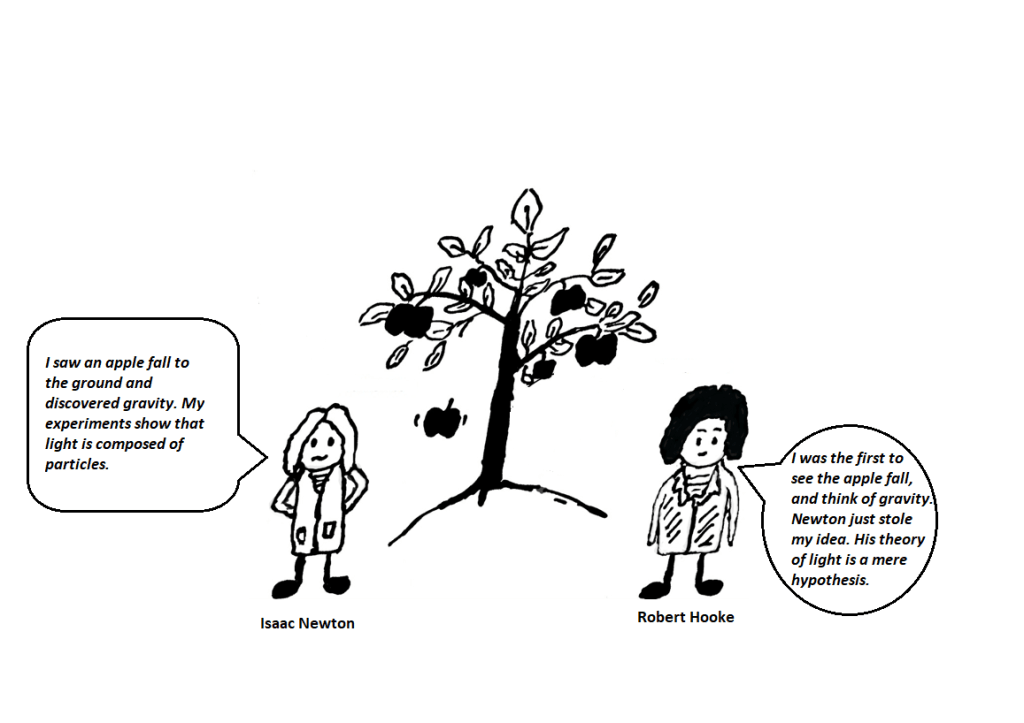
If you have studied science in high school, you might be familiar with Hooke’s law. Don’t worry! this is not a physics lesson, and I do not intend to explain Hooke’s law here. I am more interested in jotting a few words about Robert Hooke— a British polymath who is also called “England’s Leonardo da Vinci”. Apart from Hooke’s law, he is often credited as the first to visualize a microorganism using a microscope.
At the zenith of his career, Robert Hooke was considered an authority, and not just in science; after the great fire that devastated London in 1666, Hooke was put in charge for surveying the city for reconstruction. Though he made many significant contributions in science, the British Leonardo became more famous, rather infamous, for his rivalry with Isaac Newton— a great scientist in his own right.
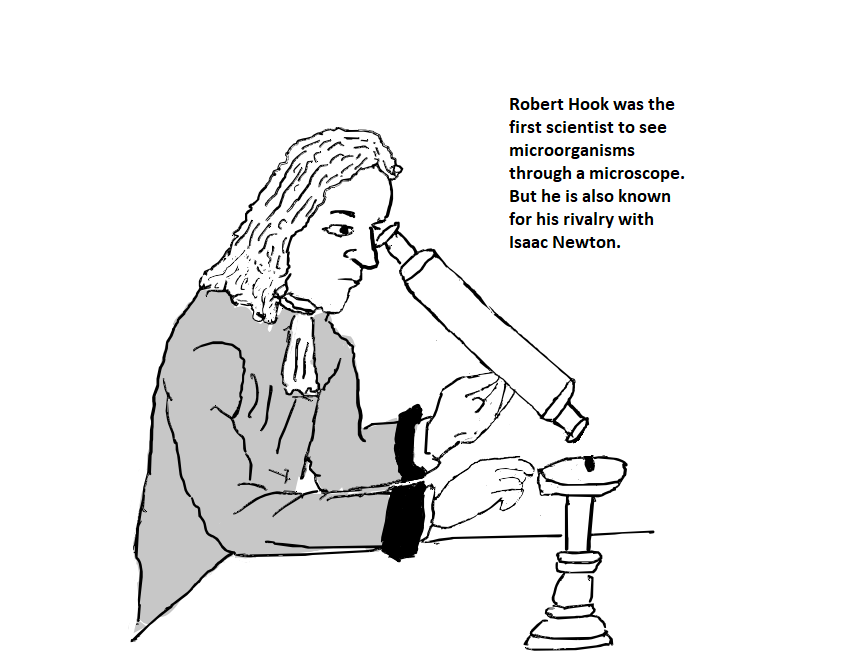
The story goes like this:
Around the year 1672, the Royal Society—the most eminent scientific institution in Britain—got wind of Newton’s brilliant work on light and colour and invited him to publish a paper on the subject. In his paper, Newton posited that light is composed of invisible particles. This was a radical notion at that time. Robert Hooke, an influential member of the Society, led the pack of sceptics and declared that Newton’s research was a mere hypothesis.
In 1686, when Newton published his first volume of Principia, Hooke claimed that it was he who had given Newton the idea of universal gravitation. Though the two scientists remained adversaries till Hooke’s demise in 1703, the constant criticism from Hooke forced Newton to bring significant mathematical refinements in his scientific concepts. Thus, in a way, Robert Hooke proved to be Newton’ friend rather than a foe.
Those who criticize or belittle you are mostly viewed as your enemies, and they sometimes are. Robert Hooke criticized Newton’s ideas, but that criticism led to improvements in Newton’s work. If people laugh at your presentation, don’t drown yourself in a river of embarrassment. Rather identify what made them laugh and improve on that. Try to find friends in your foes; take their criticism positively. The following tips should help you do.
One: You Are Not an Exception
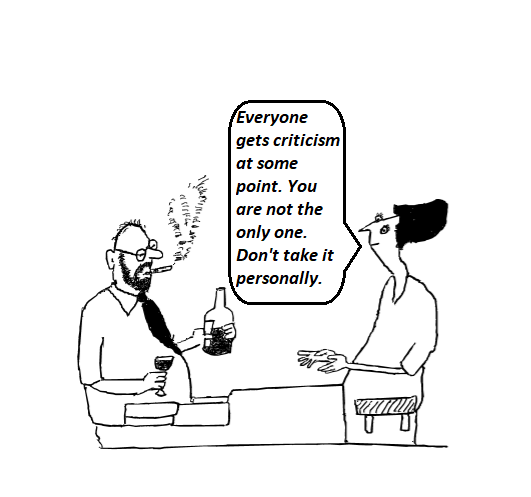
If you are being criticised for something, you are not the only one facing that predicament. Criticism is an essential part of life. No matter who you are or what you do, you will be criticized at some point. It could be your parents, teachers, siblings, friends, or rivals— there is no shortage of critics out there. Criticism is unavoidable and you are not exempted from it. You are not an exception, so don’t take it personally.
The first thing you need to do to handle criticism positively is to accept that you can be criticized. And that some of that criticism could be justified as well. Embrace the fact that criticism is a part of life and in some cases, it can lead to improvement opportunities.
Criticism is part of life. You can’t avoid it no matter what you do. Rather than taking it personally, embrace it and improve upon your shortcomings.
Two: Your Feelings Will Be Hurt and That’s Okay
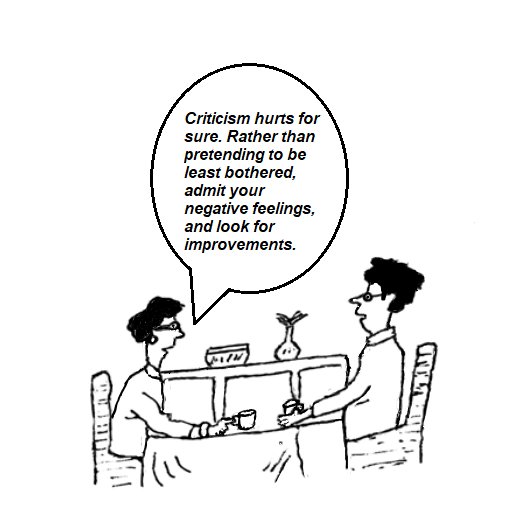
Another fact that you need to acknowledge is that being criticized is not a nice feeling. Why? Because it bruises your ego; you feel inappropriate. This feeling of inappropriateness is natural. There is no exception to this as well. So rather than questioning your own emotions or trying to fool yourself as if nothing has happened, embrace another reality of life that criticism hurts. Why does it hurt? Let’s analyse.
Various psychological factors come into play when we are being criticised. Sometimes when criticism is not delivered in an objective manner, it naturally makes us defensive. For example, when the critic’s tone is sarcastic, the opinion being expressed is stained with irony, hence losing its objectivity, and therefore, is often deemed as a personal attack to the person being criticised.
Even when it is delivered in a gentle way, criticism can sometimes touch upon deep rooted insecurities or past emotional wounds. In most situations, criticism hurts our feelings, let’s admit it.
Being criticised is not a nice feeling, let’s admit it, and work on areas for improvement.
Three: Don’t React Impulsively
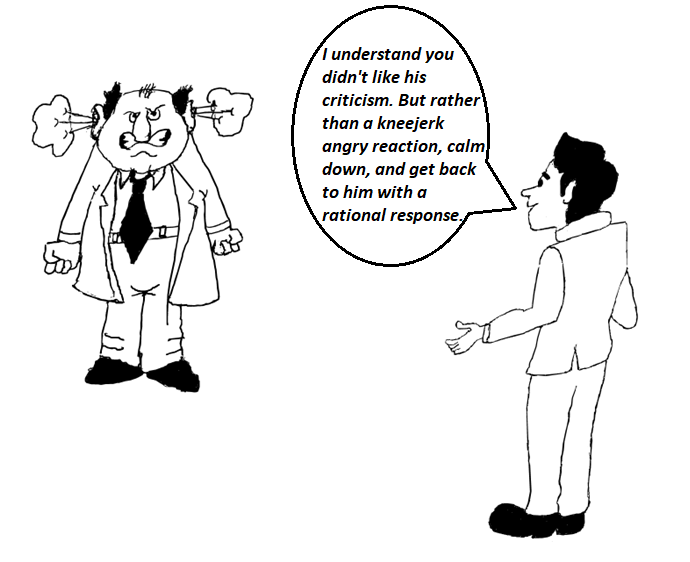
Suppose you are presenting an idea to an audience. One of the attendees (possibly your boss or his boss) seems to disagree with your ideas. As soon as you see the first sign of disagreement, stop yourself from reacting immediately. Give yourself a few seconds; let your brain process the situation and prepare a proper response. If you react abruptly, you might regret that later. Stay calm and look for a rational response rather than a kneejerk reaction.
Being able to convert an emotional kneejerk reaction into a rational response is a skill linked with an individual’s emotional intelligence. In this regard, it is important to understand the difference between an emotional reaction and a rational response. An emotional reaction is an automatic, emotion driven reflex to a situation. On the other hand, a rational response is a well-thought-out, deliberate action based on reason and logic.
How to come up with a rational response, the next few tips will elaborate.
Do not react promptly. Think about a rational response.
Four: Take Criticism as Feedback
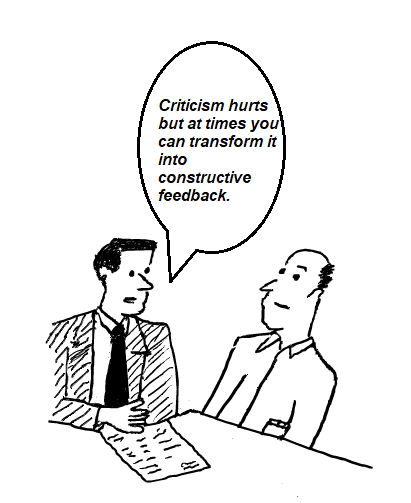
Imagine another scenario: you are sitting with your boss for a performance appraisal. He or she has marked a certain grade for you which you aren’t happy with. Your boss is explaining the reasons for the lower grade your received. Rather than taking this conversation as disapproval, think about receiving it as feedback — a constructive assessment intended to bring positive transformation e.g. improving your skills, getting better at your working relationships etc.
A useful technique to convert criticism into constructive feedback is to separate the critique from your personal identity. That means any criticism on your work is not a condemnation on you as a person. Rather the intent is to improve performance and not to degrade any individual. This can be achieved by practicing a few useful techniques:
- When being criticised, separate the critique from your own existence, and imagine seeing it as if you are seeing another person standing in front of you.
- Filter out the core message out of the critique, ignoring the tone and tenor of the critic.
- Follow what is being said, rather than who is saying that. For sure, who is saying matters as well because sometimes, your critics may have malicious intentions. However, to filter out constructive feedback, this can be ignored temporarily. More on critic’s intentions in tip number six.
Receive criticism as constructive feedback by separating the critique from your personal identity.
Five: Listen to Understand, Not to Reply
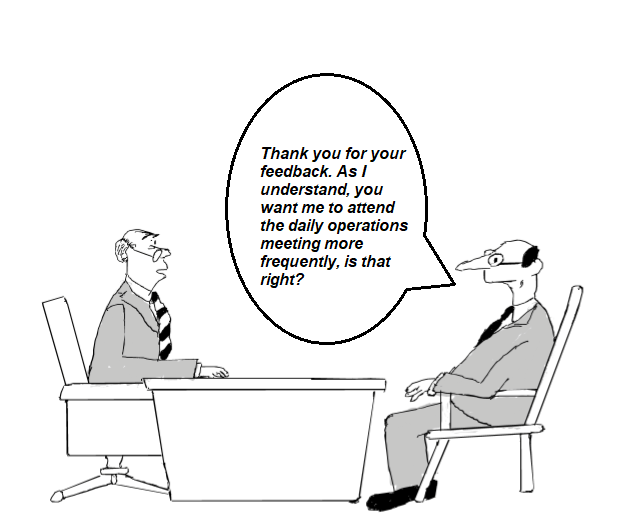
Good learners are often good listeners; and good listeners listen to understand, not to reply. Before preparing a reply, seek to understand the content of criticism. Do not interrupt while others are speaking; let them finish their argument, while holding your own thoughts in the background. Repeat what you have understood and get an affirmation from your critic. For instance, after your boss has finished explaining the reasons for your lower grades, you may ask’
“Thank you for your feedback. As I understand, you want me to attend the daily operations meeting more frequently, is that right?”
If needed, get more clarity by asking more questions. The clearer you are about the real issues, the better you would be able to improve upon them.
Be a good listener. Do not listen to reply; listen to understand. Repeat the feedback as you understand it.
Six: Assess the Intent and Content
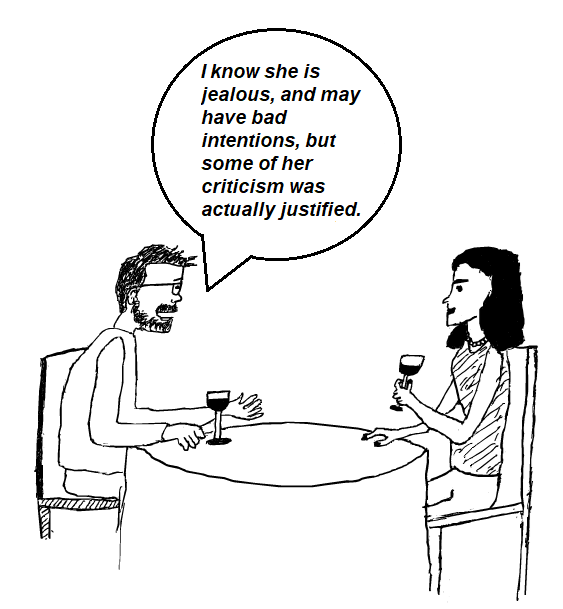
Assuming you have succeeded in holding back your initial emotional reaction, have decided to take criticism as feedback, and have listened and understood the subject matter well enough, it is time to wear your critics’ shoes. Put yourself in their position and analyse the intent and content of the criticism that you have received. Was the critic trying to help or just venting their own frustrations? Was there any actionable advice being offered? Was that an objective feedback?
An objective or positive feedback detaches the individual from the problem. Rather than being general, objective feedback is factual, impartial, and actionable. For instance, if your boss remarks “your presentation was boring”, this feedback lacks objectivity. By contrast, a more objective feedback would look like “your presentation exceeds the general ten minutes time limit, the ideas presented should be split into bullet points, and statements should be supported by data.”
It is likely that an unbiased, impartial review may tell you that at least some of the criticism was actually justified. This is not a bad thing; this in fact is an opportunity for improvement.
Look for objective feedback while receiving criticism. Review the intent and content, while looking for areas for improvement.
Seven: Get Back with an Effective Response
So far you have weathered the criticism by successfully halting an emotional reaction, by understanding and evaluating the feedback, and by segregating the justified and unjustified complaints. Now, the final step is to prepare and present a response. You can present it right away if you are ready; if not, you can ask for some time to get back. However, don’t let this break turn into an excuse for eluding the situation. Once you commit to get back, do get back and get back firmly.
As pointed out earlier, your response should be articulate and deliberate. A few features of an articulate response include:
- It is actionable. For instance, if you have received criticism for your presentation, and want to improve upon that, your response might sound like “Based on the feedback, I will ensure my next presentation doesn’t exceed the ten minutes time limit, will include bullet points, and will include statistics to support my points”.
- It is intentional — it evaluates the possible outcomes before taking actions. For example, after accepting the shortcomings in your presentation, you might need to prepare and present a better presentation, which can be beneficial to undo the negative feelings between you and your boss.
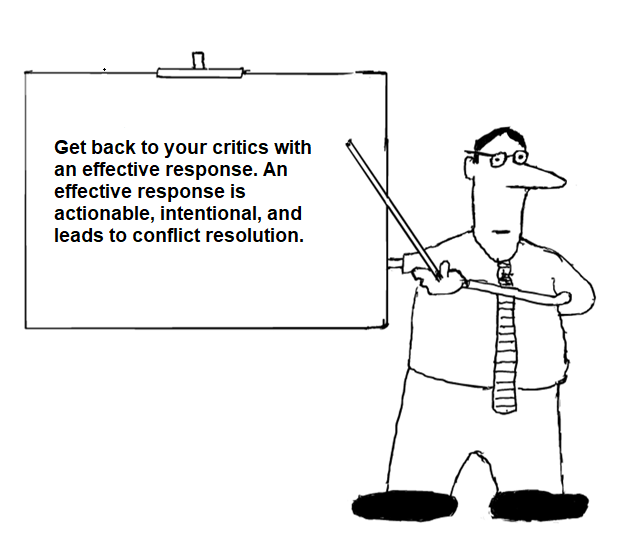
- It often leads to conflict resolution and trust building. If you show courage to accept your mistakes and improve upon them, this will enhance your rapport with your peers.
Buy some time to prepare and get back to your critics with an effective response.
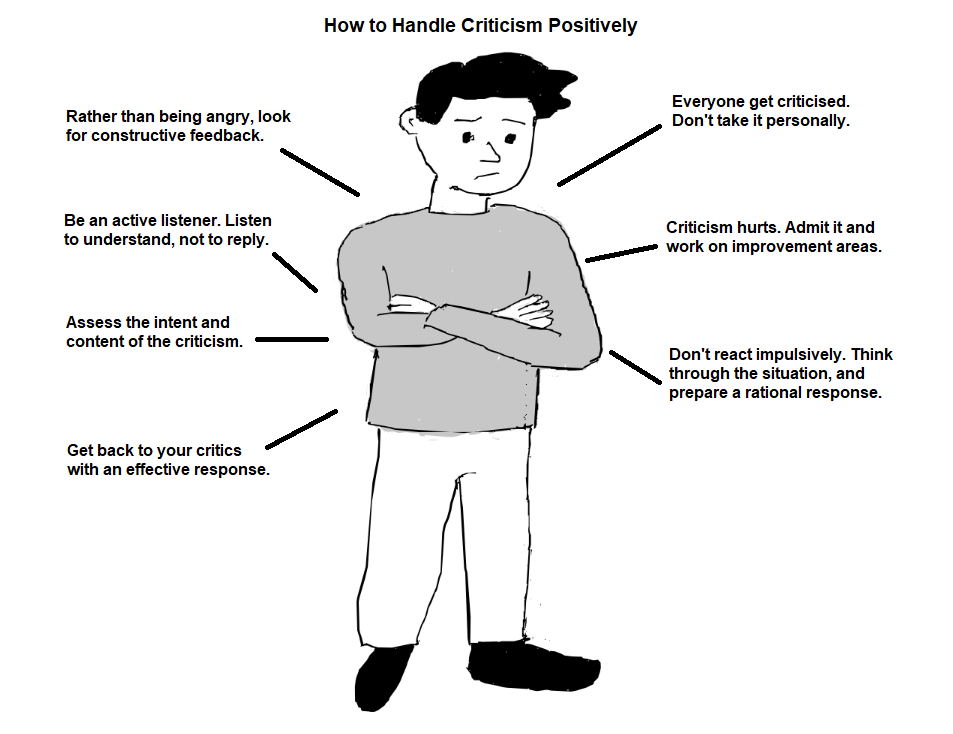
In A Nutshell:
If you can’t handle criticism, below tips should help:
- Criticism is unavoidable. All of us get criticised at some point.
- Criticism hurts. Accept it and look for improvements.
- When being criticised, avoid reacting abruptly. Look for a rational response.
- When being criticised, convert it into feedback by separating criticism from you own identity. Filter out the core message from the way it is being delivered.
- Listen to understand, not to reply. Repeat the feedback to get clarity.
- Evaluate if there was an objective feedback in the criticism you have received.
- Get back to your critics with a well-prepared response.
 Amin Academy
This was really interesting. I especially enjoyed the connection between Hooke and Newton and the reminder that criticism, while rarely enjoyable in the moment, can sometimes sharpen us in ways encouragement alone cannot. Plenty of wisdom here and definitely a few points worth keeping in mind the next time criticism comes my way.
LikeLiked by 1 person
Thanks for reading and liking. Glad you found it useful.
LikeLiked by 1 person
Of course, criticism is unavoidable even if we do nothing, so the only course available to us is to take it normally and try to foster a habit of “let go”. No doubt criticism hurts everyone, but we can’t do anything to silence the critics. However, there must be a difference between positive and negative criticism. Positive criticism helps us improve, whereas negative criticism leaves us demoralized.
LikeLiked by 1 person
Off course, criticism for the sake of criticism is unjustified. It’s important to differentiate between positive and negative criticism. Thanks for your feedback. Much appreciated.
LikeLiked by 1 person
Good post after a long hiatus and this resonated deeply.
LikeLiked by 1 person
I shared your site with my husband; he will really benefit from this post. The illustration here looks like something he would have drawn; as an engineer, he’s very systematic. This will make sense to him concretely, thank you. I benefited from it as well.
LikeLiked by 1 person
Thanks for reading, liking, and sharing. Glad you found it useful. Much appreciated. Cheers
LikeLiked by 1 person
Interesting
LikeLiked by 1 person
Thanks for reading and liking
LikeLike
Pingback: The Feeling Before the Story – Vachon Imagined
Thanks for reading, liking, and sharing. Much appreciated.
LikeLike