“YOU’LL NEVER AMOUNT TO ANYTHING!”, said the mother to her eldest son. Her frustration was explicable. Widowed at twenty-nine, the young mother of three had to work hard to earn little; and with needy toddlers in tow, she had no option but to count on her eldest son, Harland. While the mum labored for long hours in a tomato canning factory, six years old Harland was assigned to babysit and cook meals for his younger siblings.
As he turned ten, Harland’s mother sent him to work on their neighbour’s farm. The job paid two dollars a month plus meals. The farmer asked young Harland to clear bush from the field. But the boy got distracted and started loafing around, watching squirrels and birds— he was only ten! The farmer fired him from the job.
It was one of the numerous jobs he would lose or quit during his career. However, Harland David Sanders, who later became Colonel Sanders, would recall during his later years how that singular moment of failure and the look of despair on his mother’s face left a profound impact on him. During next few decades, Harland would switch several jobs including a farm worker, a fare collector, a paint worker, a blacksmith’s assistant, a coal loader, an insurance salesman, an army man, even a lawyer.
One day, while still looking for a job, Sanders got a ride with a general manager at Standard Oil Company of Kentucky. The man saw some potential in him and hired him as a service station operator. While he filled cars with gasoline, Harland started cleaning and inflating tires for no charge. He began early in the morning and kept the station open till late night. With such excellent service, his gas station became the best in the neighborhood. But that didn’t last for very long.
Like many others, Sanders could not survive the great depression and in 1929, his gas station got closed. However, his excellent repute in the area did not let him remain out of work. A year after, Shell Oil Company gave him a new station to run in Corbin, Kentucky. While running the gas station, Sanders launched a side business: he started offering home-cooked meals to travelers who stopped by.
Selling hot meals started as a side business, yet over the years, Sanders saw more success in it. A few years later, he opened a restaurant. By and by, the restaurant became so famous that it became a source of pride for the state of Kentucky. In 1936, Governor Ruby Laffoon named Sanders to the Honourable Order of Kentucky Colonels. From then on, he dressed like a gentleman and went by Colonel Sanders.
In November 1939, a fire destroyed Sanders’s Cafe. However, this did not break his courage. Soon afterwards, he built a bigger and better restaurant and motel. In 1955, when Highway 25 was rerouted, the new road bypassed Corbin. Once again Sanders’s business died off. This time he had to sell his property to pay taxes and remaining bills.
With no money to build another business, a sixty-five year old Colonel Sanders started preparing and delivering fried chicken to restaurants who chose to be his franchisees. While his wife stayed at home to fill the orders, Colonel often slept in his car to save money. Their tireless efforts bore fruit and by July 1959, the couple had bought a property in Shelbyville, which became the Kentucky Fried Chicken headquarters.
By 1960, more than two hundred restaurants were selling Kentucky Fried Chicken in the United States and Canada. By 1964, the company had grown too big for Sanders, and he sold it for $ 2 million.
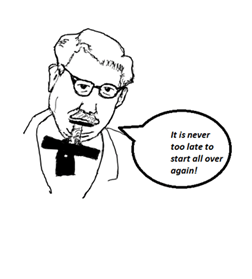
Kentucky Fried Chicken, now called KFC, has more than 22,000 restaurants in around 150 countries. Colonel’s image still appears on KFC packaging, reminding us how an ordinary man can become an icon through hard work and grit. His life is a prime example of how to rise again after each failure.
Most of us would have experienced such moments when failures break our courage. We are disappointed and lose any hope for future. Only a few of us have the courage to overcome failures and rise again. Following tips should help you confront failures and rise again after each fall.
One: Success and Failure Are Relative
Success and failure are relative terms. For instance, if you buy a nice house and a comfortable car, that may well be success for you. However, you still don’t own a Taj Mahal and don’t drive a Bentley yet. So if owning a Taj Mahal and driving a Bentley is your success criteria, you would still consider yourself a failure. You need to define your own success and failure criteria.
A pragmatic approach towards defining your success and failure is to look at available resources and circumstances. For instance, if your best earnings and tactfully enhanced savings can allow you to buy a medium sized house with a reasonably comfortable lifestyle, then that should be the yardstick for your success— rather than owning a huge mansion and a fleet of luxury cars. A well-balanced set of success criteria is better than overachieving in a certain area while failing in everything else.
Success and failure can be different for different people. Define you own success and failure criteria.
Two: Accept Your Failures
After defining your success criteria, if you find yourself unable to meet those goals and feel like a loser, accept the fact that you failed. Accepting your failure is an important step towards defining a way forward. Failures are embarrassing off course. People often tend to deny their failures and look for excuses. Such stubbornness won’t take you any further.
A failure may result from a mistake, a lack of understanding, or a miscalculation. When such things happen, it is important to reflect upon them, acknowledge your role in your failures, identify the root causes, and outline changes to prevent such mishaps in future. This will not only reduce the chances of failure but help improve your skills and develop better processes for future.
If you have failed on your success criteria, admit it and prepare a better future plan.
Three: Express Your Emotions Peacefully
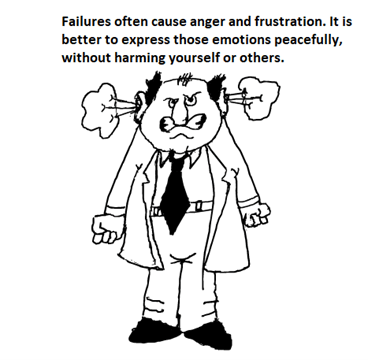
Failures accompany a variety of emotions: anxiety, anger, shame, uncertainty—all of these are uncomfortable. Don’t hold them back if you can’t, just let them out without harming yourself and others. For instance, you can cry alone and let your emotions out. There is no shame in doing that.
While it is important to acknowledge your negative feelings after a failure, try to channel those emotions towards positive motives. For example, you can use your failure to motivate yourself to try again— this time more wisely. In this way, your failure can become a reminder to help you keep going when you feel like quitting.
Its okay to be frustrated at failures, but express your emotions peacefully.
Four: Avoid Unhealthy Highs to Numb Pain
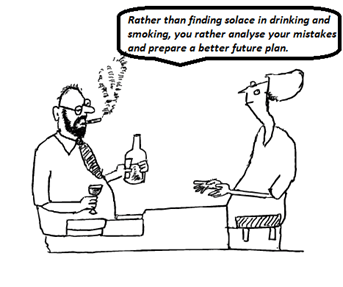
Failures are painful. Some people try to find ways to numb their pain through unhealthy means e.g., finding solace in alcohol, indulging in impulse purchasing to feel better, blaming others to fuel your self-righteousness etc. Avoid these highs as they will just numb the pain temporarily and take you away from addressing the actual problems.
Contrary to above mentioned unhealthy highs, you can adopt some healthy behaviours to deal with the pain associated with your failure. Be kind and compassionate towards yourself. Don’t judge your abilities on the basis of a single mishap. Remind yourself that everyone experiences setbacks in life, and that your failures do not define your identity or worth.
Rather than trying to numb your pain by indulging with unhealthy highs, identify the problem and try to resolve it.
Five: Analyze Your Mistakes
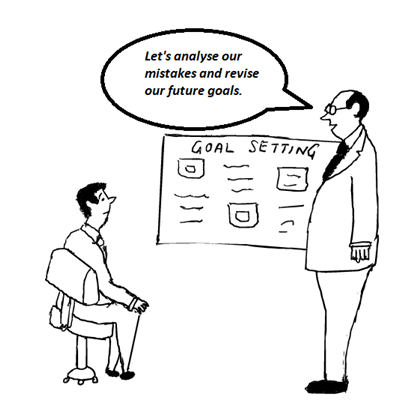
Once you have accepted your failure and released your emotions peacefully, get back to the white board to analyse what went wrong and what could have been done better. There could be some situations when your failure was totally out of your control; however, it would still be worthwhile to review your work so that you can try next time more wisely.
While analysing your mistakes, look for common pitfalls such as ambiguities around objectives, unrealistic goal setting, poor communication, lack of experience etc. Identification of mistakes will lead to corrective action plan such as redefining problems, setting more realistic expectations, a mechanism for better communication, training needs, so and so forth.
Analyze your mistakes and make a better plan for future.
Six: Make a Better Future Plan
An unbiased analysis of your mistakes would give you an opportunity to improve upon your work and chalk out a better future plan. You may have failed repeatedly, and this should have disappointed you for sure, but each failed attempt takes you closer to success. The more mistakes you make, the better you get at it.
Better planning for future involves early identification of potential issues, developing contingencies, identifying and prioritising risks, and implementing appropriate controls. Better stack holder engagement, regular progress reviews and required course corrections are key ingredients of better planning. Learnings from past failures and successes are instrumental to successful future planning.
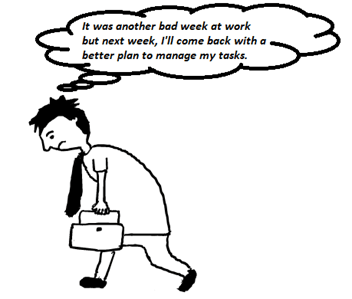
It’s okay to fail. Come back with a better plan.
Seven: Don’t be Afraid of Failing Again
Above tips are intended to inculcate growth mindset in your heart and mind. Following these tips would likely ensure that you don’t repeat the same mistakes and possibly make fewer mistakes as such. However, it does not mean you can’t fail again. What that means is that each time you fail, you get closer to your objective. The more you fail, the more you grow.
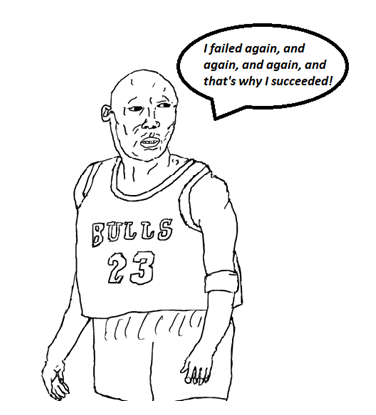
Most of the successful people out there reached the summit after failing again and again. Let me conclude this by referring to Michael Jordan’s famous quote where he said that he failed again and again and again, and that is why he succeeded.
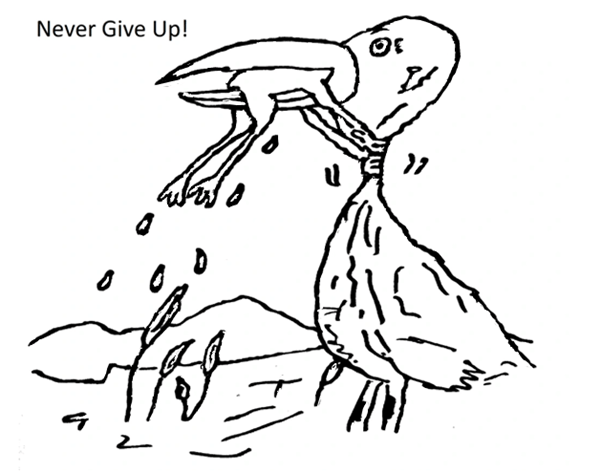
Be ready to fail again and again; each failure takes you closer to success.
What stands out is how clearly failure is framed as a process rather than a verdict. The progression from acceptance, to analysis, to planning makes resilience feel practical—not abstract. Thank you for laying it out so clearly.
What makes this article effective is the structure. Framing failure as a sequence — acceptance, emotional regulation, analysis, and planning — turns resilience into something actionable rather than abstract encouragement. The progression feels practical and grounded.
I especially appreciate the reminder that failure does not define identity. That distinction between outcome and worth is often overlooked, yet it is essential for sustainable growth. Clear, disciplined thinking throughout.
Thanks Livora, glad you found it useful. It is important to realise that no one is exempted from failures in life. No one can win all the time. People envy successful people without realising the failures in the background. Appreciate your comment.


 Amin Academy
Excellent article. I learned a lot and it was very inspiring!
LikeLiked by 4 people
Thanks for reading and liking. Glad you liked it.
LikeLiked by 2 people
👏👏👏
LikeLiked by 3 people
Happy new year 😇🌷
LikeLiked by 4 people
Happy New Year 👍🎉
LikeLiked by 3 people
😇🌷
LikeLiked by 1 person
Good advice.
LikeLiked by 5 people
Thanks for reading and liking.
LikeLiked by 3 people
What stands out is how clearly failure is framed as a process rather than a verdict. The progression from acceptance, to analysis, to planning makes resilience feel practical—not abstract. Thank you for laying it out so clearly.
LikeLiked by 3 people
Thank you for reading and liking. Glad you found it useful. Appreciate your feedback.
LikeLiked by 2 people
Well discussed. 😊
But, why have you stopped writing?
LikeLiked by 3 people
Thanks for reading and liking. Been busy for last couple of months. Will start again next week. Thanks for your encouragement. Much appreciated 😊
LikeLiked by 3 people
Pingback: Seven Steps to Transform Your Passion into Your Profession | Amin Academy
What makes this article effective is the structure. Framing failure as a sequence — acceptance, emotional regulation, analysis, and planning — turns resilience into something actionable rather than abstract encouragement. The progression feels practical and grounded.
I especially appreciate the reminder that failure does not define identity. That distinction between outcome and worth is often overlooked, yet it is essential for sustainable growth. Clear, disciplined thinking throughout.
LikeLiked by 3 people
Thanks Livora, glad you found it useful. It is important to realise that no one is exempted from failures in life. No one can win all the time. People envy successful people without realising the failures in the background. Appreciate your comment.
LikeLiked by 2 people
Does everyone else agree that this post was ‘finger lickin good’? 🐔
LikeLiked by 4 people
Thanks for reading. Glad you liked it. Much appreciated:)
LikeLiked by 3 people
Thanks. I’m starting all over again. I’ll keep going. 🙂
LikeLiked by 4 people
That’s great. Good luck with your startup. Thanks for reading and liking. Cheers
LikeLiked by 3 people
Thank you. Learning as I go. 🙂
LikeLiked by 1 person
Very interesting read. Thank you for sharing it
LikeLiked by 2 people
Thanks for reading and liking. Glad you found it interesting. Cheers
LikeLiked by 1 person