
Who is a manager? Well, all of us are managers in our own capacities—we manage our lives if nothing else. However, being a manager in a medium to large organization is a different ballgame. Corporate managers need to possess a dynamic and varied skill set to thrive within their role. This article is intended to improve your management skills both in personal and professional lives.
What Is Management ?
You may find several definitions of management on internet and in books. However, a simple definition is as follows:
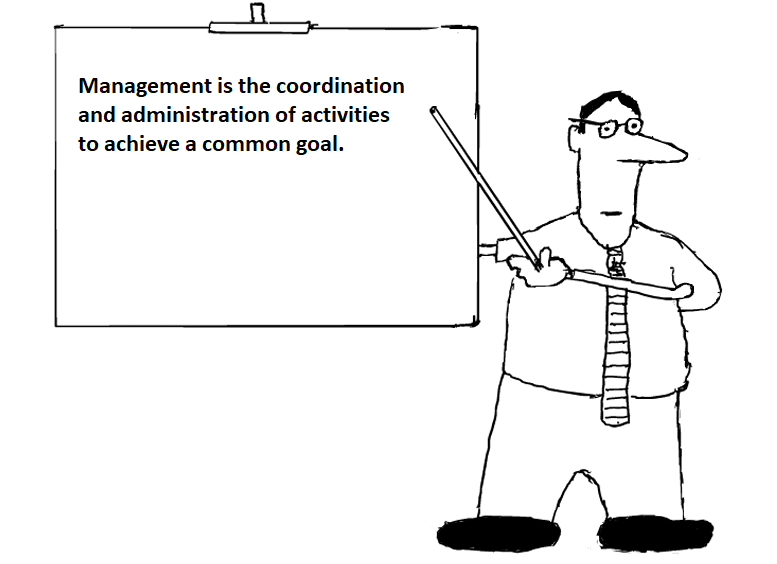
Management is the coordination and administration of activities to achieve a common goal.
These activities may include defining organizational strategies, setting goals, allocating resources, coordinating with staff for relevant tasks, so and so forth. Sometimes management also refers to the senior staff members of an organization such as heads of departments and CEOs. Notice the phrase “a common goal” in above definition— this implies that effective management of activities usually involves more than one individual, and that is where it gets complex.
Just like the word management, a manager can be described in several ways, ranging from the coach of a sporting team to a CEO of a multinational company. Even the president of a country is essentially a manager. A common definition of a manager would be:
A manager is someone responsible for organizing and directing a group of people or a project.
A manager could be a team leader, a project in charge or a coach. A manager uses department resources—both people and equipment—to get the job done. A large organization can have multiple managers to streamline its operations. Here are a few types and categories of managers:
- Top Managers: Top managers are involved with strategic decisions and policy making of an organization. They are responsible to oversee and ensure that all operations and activities are aligned with the company’s mission.
- General Managers: General managers are responsible for making sure that the units are producing revenue as they should. They create plans related to a product or service and ensure that those plans are executed.
- Line Managers: Line managers are the middle-managers who are responsible for getting the output from staff under them. They evaluate the results of the assigned activities and report to the upper management.
- Team Managers or Supervisors: They oversee and streamline a particular function in an organization e.g., a specific plant and its production. They make sure that people in the field deliver against the tasks assigned to them.
Management is the coordination of activities to achieves common goals. The person responsible for coordinating these activities is called a manager.
What Are the Roles and Responsibilities of A Manager?
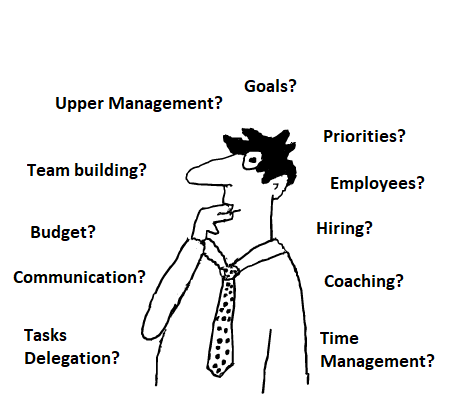
Depending upon the nature of an organization, a manager may have several responsibilities. However, there are some common tasks all managers would be required to perform. Few key areas of responsibility include:
- Developing strategies and setting priorities
- Making decisions on behalf of the department
- Organizing the department
- Placement and training of employees
- Delegating tasks and responsibilities
- Making sure staff have adequate resources to do their job
- Act as a middleman between upper management and employees
- Act as a middleman between customers and the organization
- Coach and train employees to perform their tasks efficiently
- Performance evaluation of employees
- Hiring new employees
- Managing the department budget
- Communication within and outside the department
The list is virtually endless.
A manager’s responsibilities can vary a lot. But some tasks are common for all managers.
How to Manage People?
As pointed out earlier, good management involves teamwork. Accordingly, managing employees under them is the most critical part of a manager’s role. He or she should be skilled enough to find the balance between being supportive and holding employees accountable. Great managers know how to inspire their team members, mentor them, and help them move up their career ladders. They know how to recruit productive employees and retain them. And they can sense conflicts before they surface and endeavor to resolve them early on.
Following three-step approach can be deployed for effective employee management:
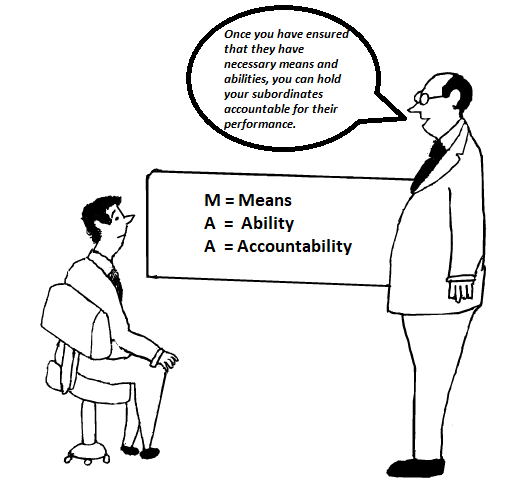
Step 1: Means: Make sure the staff has adequate means to do their job. For instance, if an employee is required to write an email to a customer and he doesn’t have a computer with internet access, you can’t expect him or her to do the job.
Step 2: Ability: Make sure employees have the ability to perform their job. Taking above example, if your employee doesn’t know how to use a computer, you likely have a wrong person for the wrong job; replace the employee or train them.
Step 3: Accountability: Once appropriate means and abilities have been ensured, you can hold the employees accountable for their tasks. Remember, without following the first two steps, applying the third step would be unfair to your employees.
Once you have ensured that your employees have enough resources and abilities to perform their job, you can hold them accountable.
How to Communicate with People?
A manager should be able to communicate effectively, both with the subordinates and the senior management. With subordinates, targets and expectations should be clearly defined. While communicating, avoid grey areas as much as possible. If something cannot be defined clearly, tell your subordinates what they are supposed to do immediately and leave the unclear part for a later discussion. If something is urgent, do communicate the urgency.
While communicating with senior management and customers, be transparent and honest. If your team cannot achieve a certain task in a certain time, do not overcommit on their behalf. Keep your commitments realistic. Having said that, you might encounter situations where some sort of diplomacy would be required. Being diplomatic doesn’t mean lying or being deceptive. For instance, if stating an unimportant fact in the middle of a discussion could lead to an unpleasant outcome, you can choose to stay quiet or wait for the right moment.
Communication is all about what to say and how to say, and more importantly, what not to say and how not to say.

How to Prioritize Your Tasks?
Depending upon the size and nature of the organization, sometimes managers might feel overwhelmed with information overload. Consequently, they could end up overcommitting on their time schedule with a long list of tasks. However. some of those tasks would be less valuable than others. This means your task list needs to be reviewed and prioritized.
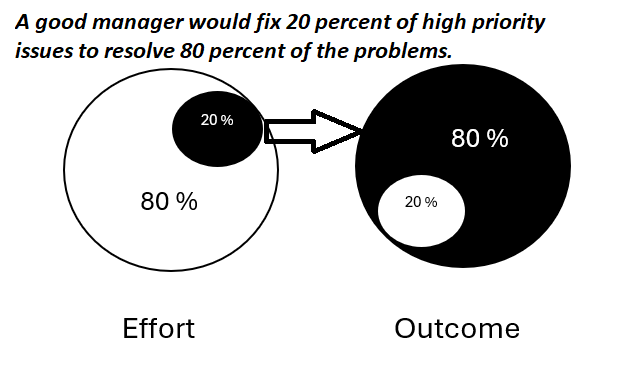
Regular segregation and prioritization of tasks is an important skill for a successful manager. The primary objective of this exercise should be to identify and prioritize areas that will produce the bulk of the results. A typical rule applied to achieve this is called the 80:20 rule. The rule states that you will often find an approximate ratio of 80:20 between related factors.
A couple of examples below:
- 80 percent of sales revenue is generated from 20 percent of the customers. Those customers should be your priority customers.
- 80 percent of the problems are attributed to 20 percent of causes. Address those causes as soon as possible.
Focusing on 20 percent priority areas allows a manager to produce maximum results with minimal resources. That is good management.
A good manager should be able to identify and prioritize activities that would produce maximum results.
How to Manage Your Time?
The 80:20 rule should save a manager a lot of his resources. One of those resources is time. In fact, time is the most precious resource of a manager. Thus, time management is a key to being successful as a manager. Apart from task prioritization, a few tips for effective time management include:
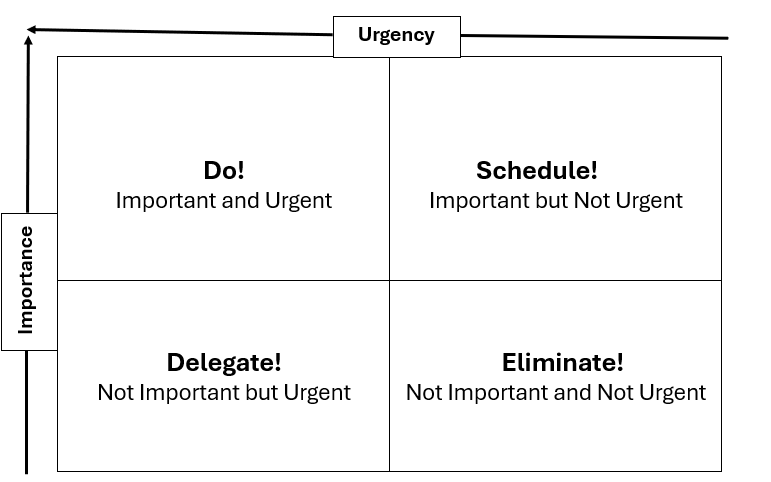
- Distinguish between urgent and important tasks. Some tasks are short and urgent; execute to get them out of the way as soon as possible.
- Make a plan for your important, long-term goals, and work on them on daily basis.
- Avoid multitasking whenever you can. Contrary to common perception, multitasking doesn’t make you efficient as a manager. It is better to tick a few boxes rather than leaving a few in progress forever.
- If you tend to be a perfectionist, keep your perfectionism pragmatic. Spending all of your time on a single task to make it look perfect is like sitting in the exam and presenting an overdetailed answer to a single question when you were actually required to answer at least five questions.
Complete urgent and important tasks straight away. Make a plan for long term goals. Delegate and eliminate tasks where necessary.
What Are the Traits of a Good Manager?
It is commonly stated that good leaders are born, not made. However, that’s probably not true for good managers. Good management skills are not something you are born with; you must learn them. Employees will do their best when working for a boss they believe in and can turn to. They also expect their superior to be appropriately competent. That is why managers need to stay on top of their own performance as well.
Apart from the main duties and skills stated above, a good manager should possess the following traits:
- A good manager tries to establish and solidify relationships within and outside the organization.
- He/she endeavors to create and nurture a positive work environment in which people support each other.
- Good managers are mentors; they make sure new talent is being looked after and developed.
- They take ownerships of their team and stand by them in difficult situations.
- A good manager manages himself before managing others. Managing yourself includes sleeping well, being accountable for your actions, doing your best, being a good listener etc.
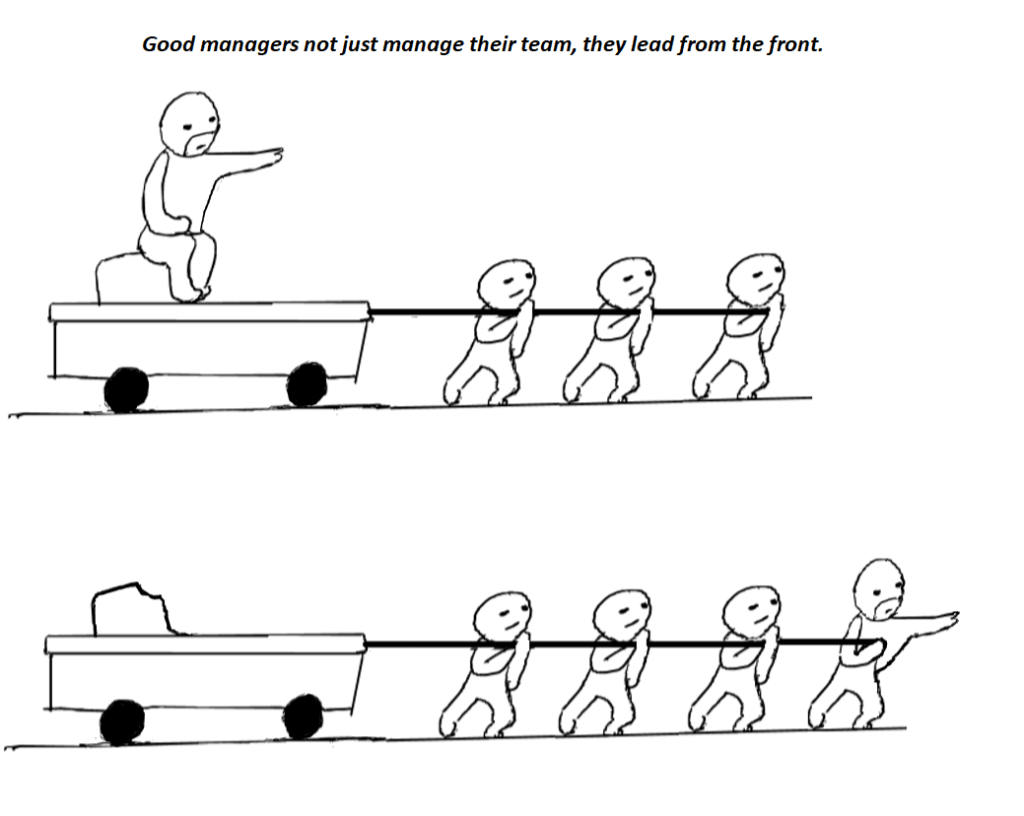
- Above all, a good manager leads by example.
Good managers not just manage their team, they lead from the front.
Summary
If you want to improve your management skills, understanding below points can be useful:
- Management is the coordination of activities to achieve a common goal.
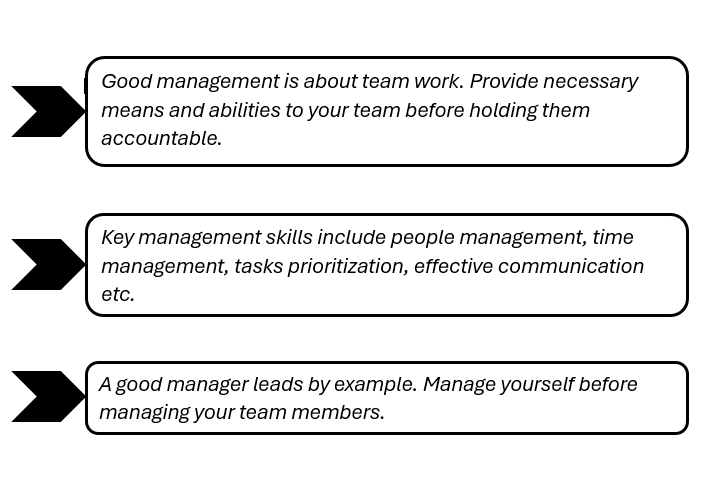
- Good management is all about team work. Manage your team by providing necessary means and abilities, and maintaining an appropriate level of accountability.
- Effective communication is the key to being a good manager. Clear communication helps you build trust with your team members.
- Apart from managing people and effective communication, time management and task prioritization are important management skills.
- Good managers manage themselves before managing their team. Managing yourself includes personal care and skills development.
 Amin Academy
Dear Amin
My spirits are up after reading your post. Thanks for liking my post One. ❤️❤️🌷
LikeLiked by 3 people
Thanks for reading and liking
LikeLiked by 1 person
You have definitely communicated well in this post to your readers… thank you for stopping by my blog.
LikeLiked by 1 person
Thanks for reading and liking my post. Appreciate your feedback. Cheers
LikeLiked by 2 people
You’re welcome.
LikeLiked by 1 person
Very detailed info!
LikeLiked by 2 people
Thanks for reading and liking. Glad you found it useful. Cheers
LikeLiked by 2 people
Hi Amin, this is a well-intentioned and content-rich piece, especially valuable for someone just stepping into a managerial role.
That said, for early-stage or impatient learners, the density might feel a bit overwhelming. You might consider breaking this into a short series, each focusing on one theme (people management, communication, prioritization, etc.). That could improve both readability and retention.
I also like your mention of using graphics, visual frameworks (even simple ones) can make concepts like the “means–ability–accountability” model or the 80:20 rule far more intuitive.
If you ever plan to expand this into a series, I’d be happy to contribute perspectives on marketing, market intelligence, and communication design, areas where management principles often take on very practical, real-world nuances.
Wishing you the best with this initiative.
LikeLiked by 1 person
Hi Chetna, thanks for your valuable feedback. As you have correctly pointed out management is a very broad field; each of those different management functions are full-fledged topics in their own right. Surely, I will use your valuable suggestions to make it easier for readers looking for shorter pieces. Appreciate your reading and liking my article. Cheers
LikeLiked by 1 person
A very useful article !
LikeLiked by 1 person
Thanks for reading and liking. Glad you found it useful. Cheers
LikeLiked by 1 person