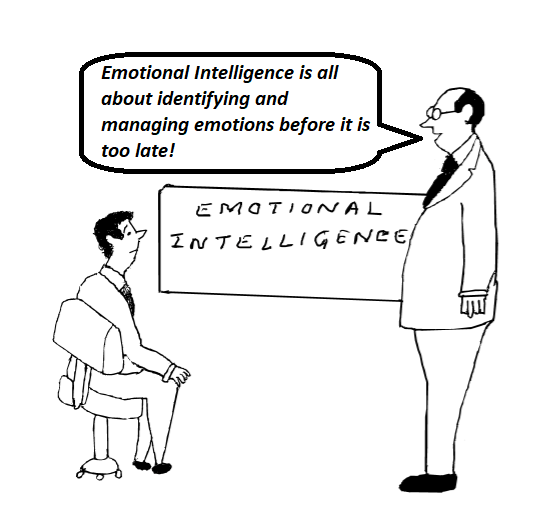
What is your IQ? Theoretically, the highest possible IQ is 200, though some people have claimed an IQ higher than that. They say Einstein had an IQ of 190. It’s nice to have a higher IQ. It shows you are an intelligent person. But in this article, we are going to talk about another kind of intelligence called “Emotional Intelligence” or EI. Let’s define it first.
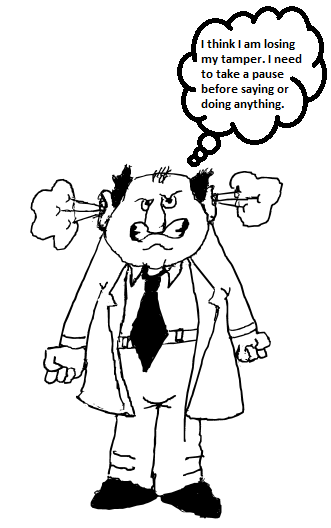
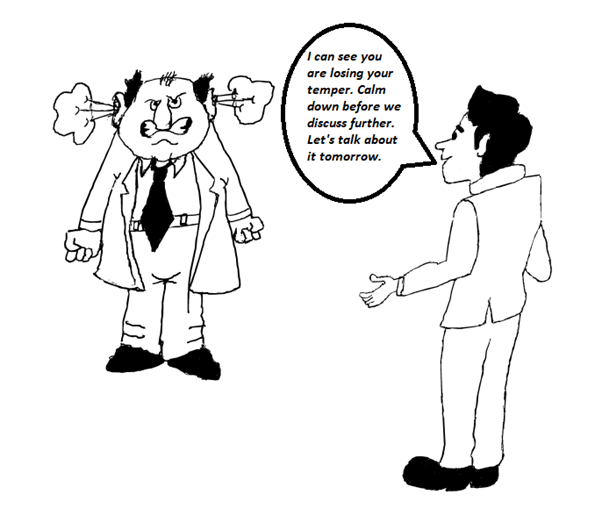
Emotional intelligence (EI) is the ability to perceive, understand, use, and manage emotions. This includes recognizing your own emotions as well as those of others. For instance, you are emotionally intelligent if you can realize that you are about to lose your temper, or if you can predict if someone else is about to get angry. With these realizations, you can adjust your behavior to avoid an unpleasant situation.
How can you improve your emotional intelligence? Let’s learn a few fundamental concepts, starting with the brain, the very organ where our thoughts and emotions are generated.
Thinking Brain Versus Feeling Brain
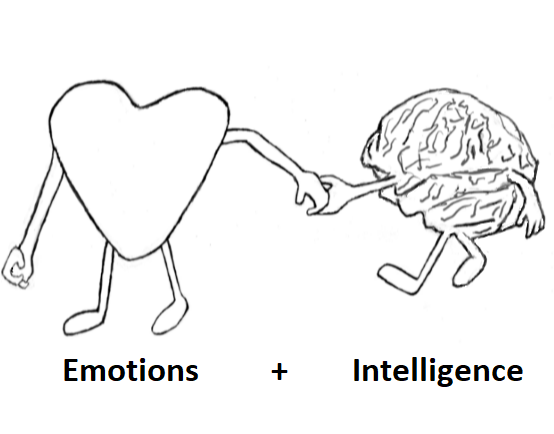
In order to understand emotional intelligence, it is useful to assume that we have two brains, although physically we have just one. Let’s name the two imaginary brains: the thinking brain — where we develop our rational thoughts, and the feeling brain — the place where our emotions are born. The two brains are intertwined. To be emotionally intelligent, one needs a balance between the two brains.
Emotional intelligence is when you gain a balance between your thinking brain and your feeling brain.
Why Do We Need Emotions
Some people think emotions are relevant only in romantic relationships or in the heat of a physical fight. However, emotions are an essential part of our daily lives. Without emotions, there won’t be any difference between you and a machine. Though seemingly intangible, emotions are an essential part of every interaction we have, every situation we deal with, and every decision we make on day-to-day basis.
Emotions help us in many ways. They help us reminisce old memories and experiences and learn from them. Here is an example. Imagine you touch a hot stove and burn your hand. The pain you go through will be stored in your memory. Whenever you get close to the stove the next time, the stored memory will trigger you to be watchful. In simple words, you can say you have learnt from the physical pain that you shouldn’t touch hot stoves.
Emotions help us learn from our mistakes and avoid repeating the same mistakes again.
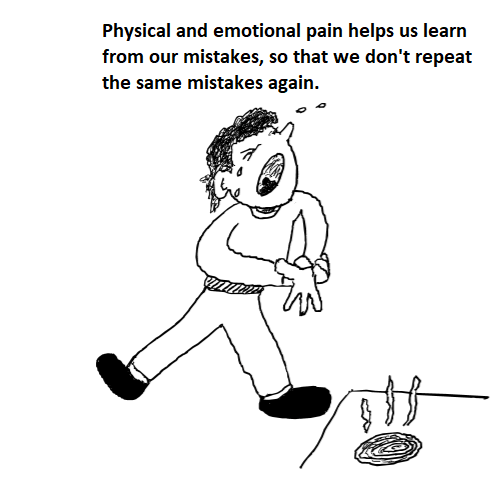
Just like physical pain, emotional pain resulting from events such as failure in exams, careers, or relationships helps us avoid repeating the same mistakes again. No one likes mishaps but such events make us emotionally and mentally stronger. In this way, emotions are beneficial for our mental wellbeing and help us overcome failures.
When Emotions Go Wrong
Our emotions are a vital tool for understanding and interacting with our environment. However, they are not infallible. They can go wrong and can lead us to make mistakes. One such situation is when our emotions go into overdrive, and we lose control over them. When emotions engulf our minds, there is little room left for rational thought. Any choices or decisions made in an emotional state of mind are more likely to be flawed.
A few examples:
- When you are frightened, you can mistake a sheet on the washing line as a ghost.
- When you are happy, you are likely to make promises that you may not be able to fulfill.
- When you are angry, you often make choices that you will regret later.
So although emotions are important, they can take control of our minds and disrupt rational thinking. It is therefore important to manage them effectively.
Emotions help us to learn from our mistakes, but when they take control, they can lead us to make more mistakes.

How To Be More Self-Aware
Self-awareness is the ability to identify and understand your own emotions and the impact they would have on others. Your emotions influence your moods, behaviors, your interactions with others, even your performance at work. So it is important to recognize your own emotions in time and be more self-aware.
The first step towards taking control and managing your emotions is to identify and name them. Emotions can be categorized as positive or negative. Examples of positive emotions include happiness, love, gratitude, contentment, awe, excitement, interest etc. Negative emotions may include sadness, anger, loneliness, jealousy, fear, anxiety, shame, disgust etc.
While positive emotions feel pleasant and desirable, they are not always useful. For instance, a happy mood can lead you to be careless and make commitments that you might not be able to fulfill. Similarly, while negative emotions are considered unpleasant and undesirable, they help us to be emotionally stronger.
Once you name your emotions and identify them as positive or negative, try to determine the causes behind your emotions. Ask yourself questions such as, what makes me angry today? when do I feel happy? What gives me hope? The answers to these questions will make you more self-aware. Self-awareness opens a path to self-regulation. Once you recognize your emotions, you can work to regulate or manage them effectively.
The first step towards managing your emotions is to identify and name them, and determine what causes those emotions. This is called self awareness.

How To Regulate Your Emotions
Imagine you hear a loud bang. Your feeling brain will respond to the bang and go into overdrive. Your body will go into a state of alert. Emotional intelligence demands that your thinking brain analyses the situation to determine if there is a real danger. If not, it will calm the feeling brain down and stop your emotions from taking over. This is called emotional self-regulation and is an important part of emotional intelligence.
Take another example. You are in the middle of a tense situation such as an argument with your brother. If you are able to pause your feelings before saying or doing anything, you can claim to have a strong self-regulation on your emotions— congratulations, you are emotionally intelligent. But you are only halfway through yet. The other half requires you to recognize other people’s emotions as well.
Once you identify and understand your emotions, let your thinking brain analyze the situation and do the needful. This is called self regulation.
How To Be Socially Aware
Apart from helping us learn from our mistakes, emotions enable us to interpret the feelings of other people, thereby allowing us to predict their actions. Imagine you are complaining to your neighbor that his dog keeps barking the whole night. Eventually the conversation turns into an argument. The argument gets heated and as you observe your neighbor’s aggressive body language e.g., clinched fists, or loud voice, you can predict if he is going to punch you in the face.
In the situation described above, you are not just dealing with your own emotions. But the emotions of the man you are confronting. As his emotions get the better of him, his body language will convey to you the impending danger. But your own emotions are not totally out of the equation. As the next step, your own emotions will come into play and prepare you for a reaction— to duck the punch or attack beforehand.
As explained above, emotional intelligence is not limited to managing your own emotions; you need to master your social interactions as well. A key skill in this regard is empathy. Being empathetic means putting yourself in another person’s shoes and assess your interactions with them. For instance, before mistreating someone, imagine swapping the roles with the person. How would you feel if you are treated the same way as you are treating others? In this way, empathy can improve your interactions with friends, colleagues, and family members.
Apart from identifying and regulating your own emotions, you need to understand others’ emotions as well. This is called social awareness.
How to Improve Your Emotional Quotient
It is commonly perpetuated that most successful people are smart or intelligent i.e. they have higher IQ than others. In fact emotional quotient (EQ) is as important for success as IQ. For instance, a student with high IQ but lower EQ may succumb to an impulse to watch a movie while he should have been studying for the next day’s exam. On the contrary, a relatively less bright but emotionally strong student can make a timely effort and perform better in the exam.
The good news is that emotional intelligence is a skill which can be improved over time. It involves learning and developing a set of behaviors. Below are some common signs of people with low and high EQ.
People with low emotional intelligence:
- Often feel misunderstood
- Get upset soon
- Become overwhelmed by their feelings
- Have a hard time being assertive
On the contrary, people with higher emotional intelligence:
- Understand when they feel certain emotions
- Remain calm and composed during stressful situations
- Are able to influence others towards common goals
- Can maintain being assertive
- Can tackle difficult people tactfully
Emotional intelligence plays an important role in both personal and professional relationships. People with better emotional intelligence are more likely to get to higher positions in their careers and be more successful in their personal lives. Education on emotional intelligence, therefore, should be mandatory, for anyone and everyone.
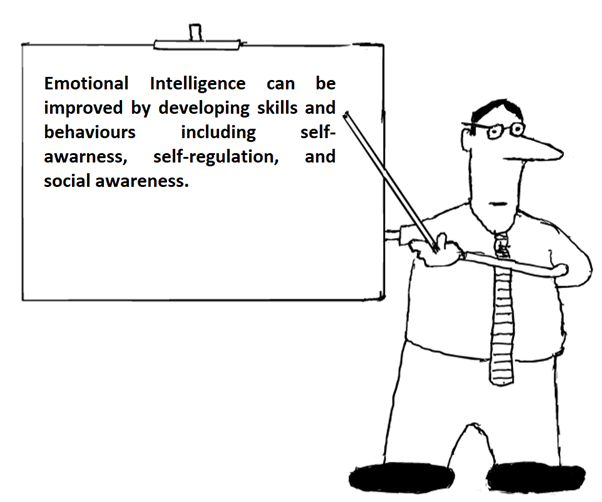
You can improve your emotional intelligence by practicing self awareness, self regulation, and social awareness.
Summary
If you want to improve your emotional intelligence, understand the below key concepts:
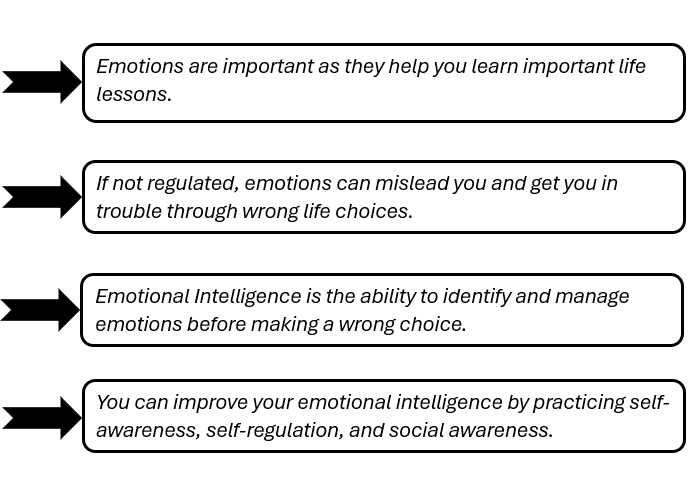
- Emotions are important as they help us learn from our mistakes, thereby making us mentally stronger. So don’t suppress or avoid your emotions.
- Despite their importance, emotions can be misleading. If not regulated, emotions can lead you to make wrong choices.
- Emotional Intelligence is the ability to identify and manage emotions. This includes your own emotions as well as those of others.
- Emotional Intelligence can be improved by practicing self-awareness, self-regulation, and social awareness.
 Amin Academy
Self control is ignored by so many people and it is so important… awesome post
LikeLiked by 4 people
That’s so true. Thanks for reading and liking.
LikeLiked by 2 people
I appreciate how clearly you broke down emotional intelligence into practical steps. The distinction between the thinking brain and the feeling brain makes the concept accessible without oversimplifying it. That balance you describe feels especially relevant in a time when reactions often move faster than reflection.
One thought that stayed with me is that emotional intelligence may not only be about managing emotions, but also about allowing them to exist without immediately suppressing them. Sometimes the wisdom is not in silencing the feeling brain, but in listening long enough to understand what it is signaling. That inner dialogue between thought and emotion seems less like control and more like integration. Thank you for laying a clear foundation for that kind of growth.
LikeLiked by 2 people
Thanks Livora, glad you found it useful. Appreciate your feedback. Cheers
LikeLiked by 2 people